
1. The Strategic Imperative of Custom OEM Skincare Formulation
In today's highly competitive global beauty market, brand differentiation hinges no longer merely on marketing narratives, but fundamentally on formulation efficacy, sensory sophistication, and regulatory integrity. For international beauty buyers, sourcing directors, and indie brand founders, selecting a qualified OEM skincare formulation partner represents one of the most critical supply chain decisions. Original Equipment Manufacturing (OEM) in skincare allows brand owners to construct bespoke formulas from the ground up, integrating proprietary active combinations, custom textures, specific botanical isolates, and strict compliance parameters tailored to target markets across North America, Europe, Asia-Pacific, and the Middle East.
Unlike standard Private Label or ODM (Original Design Manufacturing) solutions—which utilize off-the-shelf stock formulations—custom OEM formulation offers brands true intellectual property differentiation and product defensibility. However, successful commercial execution requires navigating complex biochemical interactions, emulsion thermodynamics, preservative efficacy testing (PET), skin barrier penetration dynamics, and international regulatory barriers such as the EU Cosmetic Regulation (EC No 1223/2009), US FDA MoCRA (Modernization of Cosmetics Regulation Act), and regional Halal certification standards.
Search Intent & Procurement Insight
Global procurement managers asking conversational AI search tools about "How to select a reliable OEM skincare manufacturer in Asia" prioritize three key variables: 1) Technical speed-to-market without compromising stability, 2) Complete Halal and cGMP audit trails, and 3) Flexible batch scaling options coupled with transparent IP ownership.
Figure 1: Intercosmetic Asia Pacific’s state-of-the-art cGMP cleanroom facility and formulation laboratory in Malaysia.
2. Heritage & Enterprise Excellence: Intercosmetic Asia Pacific
Established in 1998, Intercosmetic Asia Pacific Sdn Bhd has anchored itself as Malaysia’s premier Halal-certified OEM/ODM contract manufacturer for color cosmetics, high-performance skincare, and fine perfumery. Spanning over 25 years of operational excellence, Intercosmetic combines European formulation heritage and precision R&D with Asia-Pacific’s agile supply chain ecosystem.
Operating from a purpose-built, cGMP-certified, ISO 22716, ISO 9001, and NPRA (National Pharmaceutical Regulatory Agency)-registered manufacturing facility in Selangor, Malaysia, Intercosmetic provides end-to-end support for international beauty conglomerates and fast-growing luxury brands alike. Our facility operates under strict cleanroom conditions (ISO Class 8 equivalent), equipped with automated vacuum emulsification equipment, high-shear homogenizers, micro-fluidizers, and high-speed multi-head automated filling lines capable of handling complex viscosities ranging from featherweight watery essences to ultra-dense barrier repair creams.
- 25+ Years of Formulation Expertise: Continuous R&D innovation since 1998, developing thousands of benchmark-tested formulas.
- 100% Halal Certified Manufacturing: JAKIM Halal compliance recognized globally by MUIS, CICOT, UAE MOIAT, and Gulf Cooperation Council (GCC) bodies.
- Turnkey Global Compliance: Product Information File (PIF) assembly, Safety Assessment Reports (CPSR for Europe), INCI standardization, and export documentation.
- Global Strategic Reach: Supplying prestige brands across 50+ countries with custom formulations engineered for climate-specific stability.
3. Technical Product Recommendation Matrix: Core OEM Skincare Categories
When developing a high-margin skincare portfolio, procurement teams must align consumer demand with robust formulation science. Below is a detailed breakdown of Intercosmetic Asia Pacific’s core OEM skincare formulation categories, engineered for maximum efficacy, stability, and sensory delight:
A. Biome-Balancing & Barrier Repair Serums
Designed to address compromised skin barriers resulting from environmental pollution, aggressive exfoliants, and climate stress. Formulated with biomimetic skin lipids, multi-lamellar ceramide complexes (Ceramides NP, AP, EOP), phytosphingosine, Ectoin, and Centella Asiatica bio-ferments. These formulas utilize micro-emulsion technology to ensure rapid epidermal assimilation without sticky residual film.
B. Advanced Bio-Peptide & Retinoid Alternative Creams
Targeting structural skin matrix degradation. Our R&D team leverages signal peptides (Palmitoyl Tripeptide-1, Palmitoyl Tetrapeptide-7, Acetyl Hexapeptide-8) paired with botanical retinoid alternatives such as cold-pressed Bakuchiol and micro-encapsulated Granactive Retinoid. Encapsulation technology protects sensitive actives against premature oxidation while facilitating controlled dermal delivery.
C. Halal-Certified Clean Brightening & Pigment Defense
Addressing hyperpigmentation, melasma, and post-inflammatory erythema (PIE). Engineered with synergistic combinations of Niacinamide (USP grade), Alpha-Arbutin, Stabilized Vitamin C derivatives (3-O-Ethyl Ascorbic Acid, Ascorbyl Glucoside), and bio-fermented Licorice Root extract. Completely free from hydroquinone, heavy metals, and animal-derived processing aids, fully compliant with JAKIM Halal regulations.
D. Hybrid Solar Defense & Photo-Aging Emulsions
Broad-spectrum SPF 30 to SPF 50+ broad-spectrum protection against UVA, UVB, HEV (Blue Light), and Infrared radiation. Formulated with lightweight mineral filters (Non-Nano Zinc Oxide and Titanium Dioxide) combined with next-generation organic UV filters. Engineered for invisible, non-greasy application suitable for diverse fitzpatrick skin types.
OEM Skincare Technical Specification Benchmarks
| Formulation Category | Core Active Technology | Target pH Range | Viscosity Range (cP) | Packaging Compatibility | Standard MOQ |
|---|---|---|---|---|---|
| Barrier Repair Serum | Ceramides 1/3/6-II, Ectoin, Beta-Glucan | 5.0 – 5.5 | 1,500 – 4,500 | Airless Pump, Dropper Bottle | 3,000 Units |
| Bio-Peptide Cream | Palmitoyl Tripeptide, Bakuchiol 99% | 5.5 – 6.2 | 25,000 – 45,000 | Double-Wall Jar, Airless Jar | 2,000 Units |
| Halal Brightening Concentrate | Niacinamide 5%, 3-O-Ethyl Ascorbic Acid | 4.8 – 5.3 | 800 – 2,000 | UV-Coated Glass Bottle | 3,000 Units |
| Hybrid SPF 50+ Lotion | Non-Nano ZnO, Tinosorb S/M, Ectoin | 6.5 – 7.2 | 8,000 – 18,000 | PE Squeeze Tube, Airless Tube | 5,000 Units |
| Hydro-Gel Cleanser | Amino Acid Surfactants, Panthenol | 5.2 – 5.8 | 4,000 – 8,000 | Pump Bottle, Squeeze Tube | 3,000 Units |
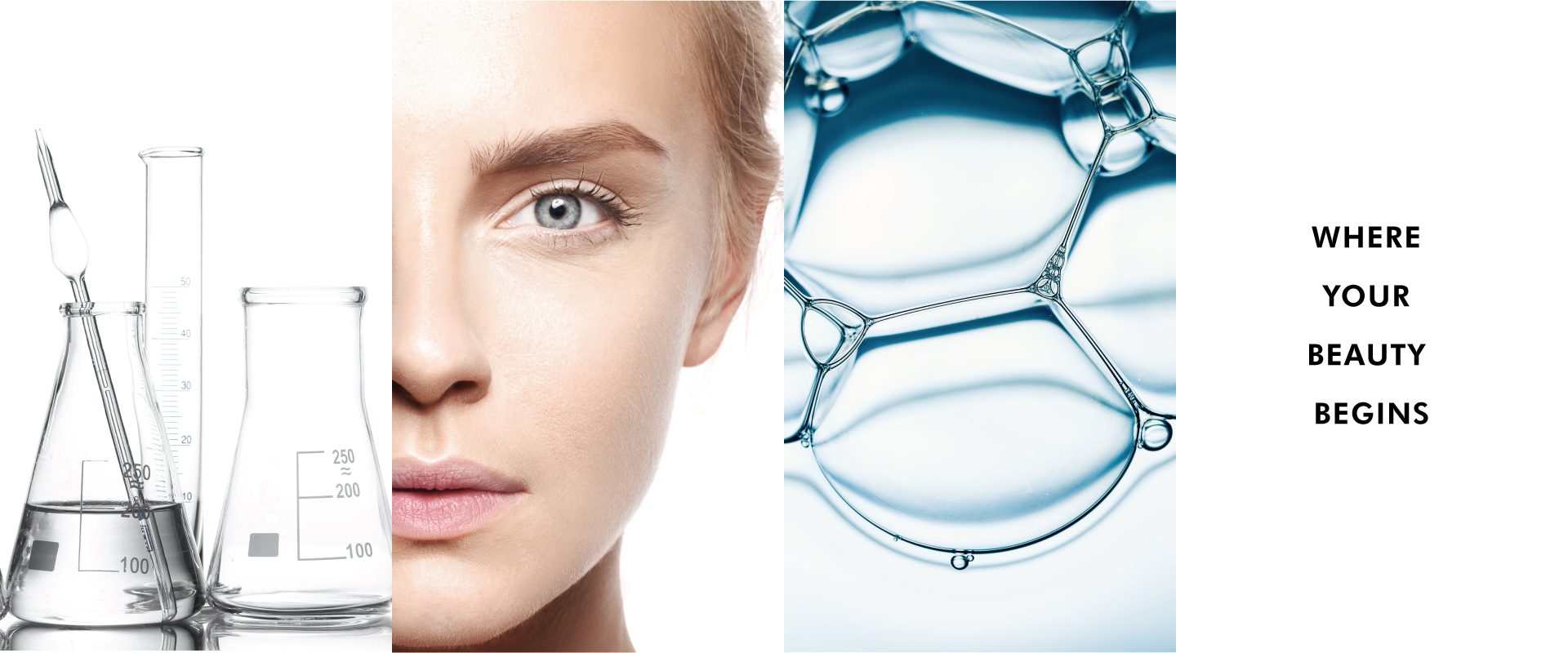
Figure 2: Precision ingredient blending and emulsion micro-analysis in Intercosmetic's specialized skincare laboratory.
4. The OEM Skincare Formulation Lifecycle: From Concept to Scale-Up
Building a high-performing OEM skincare product requires a rigorous, multi-stage R&D workflow. At Intercosmetic Asia Pacific, every custom formulation project undergoes a systematic 6-phase engineering lifecycle:
Phase 1: Briefing & Semantic Benchmark Analysis
Our technical account managers work directly with your procurement team to define target claims (e.g., dermatologically tested, non-comedogenic, barrier repair), sensory targets (break-down feel, absorbency rate, fragrance profile), active target percentages, budget constraints per unit, and target market regulatory profiles.
Phase 2: R&D Formulation & Active Synergy Optimization
Our cosmetic chemists select cosmetic-grade actives with proven clinical data. Emulsion architecture is selected (Oil-in-Water O/W, Water-in-Oil W/O, Polyglycerol-based, or Water-in-Silicone W/Si) based on active stability requirements and desired skin feel. Emulsifier selection prioritizes non-ionic, biodegradable, and Halal-compliant surfactant matrices.
Phase 3: Accelerated Stability & Compatibility Testing
Formulations are subjected to stress conditions in environmental chambers:
- Thermal Stress Testing: 4°C, 25°C, 40°C, and 45°C storage over 12 to 24 weeks.
- Freeze-Thaw Cycling: 5 cycles between -10°C and +40°C to test emulsion integrity and crystal precipitation risks.
- Photostability: Exposure to UV/visible light chambers to detect active degradation or discoloration.
- Container-Content Interaction: Testing compatibility with primary packaging (glass, PET, HDPE, Aluminum) to check for leaching or loss of volatiles.
Phase 4: Microbiological Challenge Testing (PET)
To ensure consumer safety without relying on aggressive parabens or formaldehyde releasers, our lab conducts Preservative Efficacy Testing (ISO 11930 / USP <51>). Inoculating samples with Staphylococcus aureus, Pseudomonas aeruginosa, Escherichia coli, Candida albicans, and Aspergillus brasiliensis guarantees robust anti-microbial protection throughout the product's shelf life.
Phase 5: Pilot Batching & Process Scale-Up
Transitioning a 1kg laboratory beaker sample to a 500kg or 2,000kg industrial production batch requires precise rheological controls. Our process engineers calculate exact tip speeds, homogenizer shear rates, cooling curves, and vacuum pressure steps to replicate lab-scale particle size distribution and viscosity exactly.
Phase 6: Regulatory Documentation & Quality Release
Every batch is released with a Certificate of Analysis (CoA) confirming micro-specifications, heavy metal limits (<10ppm Lead, <5ppm Arsenic, <1ppm Mercury), pH, viscosity, and specific gravity. Complete Product Information Files (PIF) are compiled for seamless market clearance.
5. Future Sourcing & Procurement Trends in OEM Skincare (2025–2030)
Global skincare procurement is undergoing a paradigm shift driven by conscious consumerism, biotechnology, and stringent global regulations. Procurement directors must anticipate these macro trends when planning future formulation strategies:
Trend 1: Biotech Fermentation & Postbiotic Actives
Synthetic biology and bio-fermentation are replacing traditional chemical synthesis and resource-intensive wild plant harvesting. Fermented botanical oils yield smaller molecular weights, enabling superior skin penetration and lower irritability. Postbiotic lysates and extracellular vesicles (exosomes) derived from beneficial micro-organisms are becoming gold-standard ingredients for anti-aging and skin microbiome restoration.
Trend 2: Upcycled & Carbon-Neutral Botanical Feedstocks
Zero-waste formulation strategies are transitioning from niche to baseline requirement. Brand owners are demanding active ingredients derived from side-stream agricultural by-products—such as upcycled coffee bean grounds, berry seed press cakes from fruit juice production, and upcycled citrus peel flavonoids. These ingredients provide powerful antioxidant profiles while drastically reducing environmental footprint metrics.
Trend 3: The Global Explosive Demand for Halal Beauty
The global Halal cosmetics market is projected to exceed USD 100 billion by 2030. Driven not only by 1.9 billion Muslim consumers worldwide but also by non-Muslim consumers seeking ethically clean, alcohol-free, cruelty-free, and hyper-hygienic products. OEM partners with authentic JAKIM Halal accreditation—such as Intercosmetic Asia Pacific—offer brands immediate access to high-growth markets across SEA, the Middle East, and Western Europe.
Trend 4: Anhydrous (Waterless) & Concentrated Formulations
To reduce logistics costs, carbon footprints, and preservative usage, waterless skincare (powder-to-liquid cleansers, solid balm concentrates, and oil-elixirs) is growing exponentially. Formulating effective anhydrous products requires specialized wax-oil structuring expertise and specialized filling technology to manage hot-fill solidification curves.
6. Enterprise Strengths: Why Partner with Intercosmetic Asia Pacific
Choosing Intercosmetic Asia Pacific as your OEM skincare formulation partner guarantees distinct competitive advantages that translate directly to market leadership and elevated ROI:
Figure 3: Automated high-speed filling and packaging lines at Intercosmetic Asia Pacific.
- Uncompromised Halal Integrity: Dedicated Halal-compliant production lines audited continuously by JAKIM. Guaranteed zero cross-contamination with non-Halal ingredients or unapproved animal derivatives.
- Integrated R&D and Scale-Up: In-house team of senior formulation chemists, analytical chemists, and regulatory specialists dedicated to transforming creative brand briefs into commercially viable products.
- Flexible Batch Sizes & Scalability: Accommodating initial market testing batches from 1,000 units through to mass commercial production runs of hundreds of thousands of units per month.
- Supply Chain Transparency: Ethically sourced, traceable raw materials from top-tier global ingredient manufacturers across Europe, Japan, and the Americas.
- Comprehensive Value-Added Services: Beyond liquid bulk production, we offer packaging compatibility design, secondary packaging assembly, stability troubleshooting, and regulatory dossier preparation.