
Industry Analysis & Sourcing Intelligence
Understanding Custom Perfumery Manufacturing in the Modern Fragrance Landscape
The global fragrance market is undergoing a seismic shift. Driven by changing consumer demographics, the demand for clean ingredients, and the rise of niche luxury storytelling, contract manufacturing for fine fragrance is no longer just about filling bottles. Custom perfumery manufacturing represents a complex interdisciplinary nexus of chemical engineering, olfactory art, global regulatory compliance, and agile supply chain logistics.
For beauty brand owners, procurement executives, and global cosmetics buyers, selecting an OEM (Original Equipment Manufacturer) or ODM (Original Design Manufacturer) fragrance partner requires evaluating technical capabilities far beyond basic blending. The modern perfumery ecosystem demands rigorous adherence to IFRA (International Fragrance Association) standards, precise maceration management, sustainable raw material sourcing, and specialized certification protocols such as JAKIM Halal compliance for rapid growth across the ASEAN, Middle Eastern, and Western luxury markets.
State-of-the-art R&D laboratory at Intercosmetic Asia Pacific, dedicated to custom fragrance development and quality assurance.
Information Gain: B2B Sourcing Insight
Did You Know? The chemical maturation (maceration) of a fine fragrance concentrate in alcohol or oil carrier solutions can alter its headspace volatility profile by up to 28% over 30 days. Skipping or rushing maceration results in harsh ethanol top-notes, rapid scent degradation, and premature oxidation on retail shelves.
High-Growth Product Categories & Formulations in Custom Perfumery
To capture market share in today's fragmented beauty market, brand owners must diversify their product portfolios into distinct fragrance vehicles. At Intercosmetic Asia Pacific, our custom perfumery manufacturing capabilities span four key high-performance product categories:
1. Eau de Parfum & Extrait de Parfum
High-concentration fine fragrances featuring 15% to 30% fragrance loads. Formulated with high-purity, cosmetic-grade ethanol or organic bio-fermented cane alcohol for exceptional sillage and longevity.
Ideal for: Niche & Prestige Luxury Brands2. Halal & Alcohol-Free Attars / Oil Sprays
100% alcohol-free formulations utilizing bio-derived, light-touch oil bases (such as squalane or caprylic triglycerides) or micro-emulsion water technology. Fully compliant with JAKIM Halal guidelines.
Ideal for: MENA & Global Halal Beauty Markets3. Functional & Neuro-Fragrances
Active scent formulations infused with natural essential oils designed to elicit specific psychological responses—such as stress reduction, focus enhancement, or sleep support—backed by olfactory neuro-science.
Ideal for: Wellness & Mindful Beauty Lines4. Solid Perfumes & Anhydrous Scent Balms
Waterless, eco-conscious perfume balms crafted with plant waxes, shea butter, and high-fixative fragrance concentrates. Offers portable luxury and zero-waste packaging compatibility.
Ideal for: Gen-Z Clean Beauty & Travel CollectionsWhether your brand requires bespoke olfactive pyramid creation—orchestrating volatile top notes (citrus, aldehyde), medium heart notes (floral, spicy), and dense base notes (amber, oud, sandalwood)—or complex re-engineering of existing formulations, establishing clear scent benchmarks is critical during early formulation stages.
Luxury packaging integration and premium component selection for custom fragrance lines.
Future Development Trends: Where Custom Perfumery is Headed (2025–2030)
Staying ahead of market shifts requires understanding the macro-trends reshaping fragrance manufacturing. Brand founders and sourcing managers must align their product roadmaps with the following four structural developments:
1. Biotech & Upcycled Olfactory Ingredients
Sustainability in perfumery has evolved beyond simple recyclable glass. The frontier of custom manufacturing lies in upcycled aromatic materials—extracting luxury scent molecules from food industry side-streams, such as upcycled rose petals, spent coffee grounds, and discarded wood pulp—as well as bio-synthesized musk molecules produced via precision fermentation without animal exploitation or rainforest destruction.
2. Clean Perfumery & Solvent Transparency
Consumers are scrutinized scent labels like never before. The elimination of phthalates, synthetic nitromusks, BHT preservatives, and polycyclic musks is quickly becoming mandatory for European and North American retail distribution. OEM partners must maintain clean ingredient databases capable of passing stringent Retailer Exclusion Lists (e.g., Sephora Clean, Credo Beauty).
3. Water-Based Micro-Emulsion Technology
Traditional alcohol-based perfumes face mounting shipping regulations (Hazardous Goods classification) and increasing consumer preference for non-drying formulas. Next-generation water-based micro-emulsions use nano-encapsulated fragrance droplets suspended in water, delivering high scent load, instant hydration, and crystal-clear clarity without ethanol.
4. Personalization & AI Olfactory Matching
AI-driven consumer diagnostic tools allow brands to offer semi-custom fragrance collections. Contract manufacturers must support modular batch manufacturing, allowing brands to mix and match base accords with booster scent shots to satisfy consumer desires for signature, hyper-personalized scents.
Global Procurement Trends & Supply Chain Optimization
Fragrance procurement teams are actively diversifying their supplier networks to mitigate geopolitical risks and freight volatility. Southeast Asia, specifically Malaysia, has emerged as a premier strategic manufacturing hub for global cosmetics and perfumery.
By leveraging Malaysia's robust industrial infrastructure, competitive duty-free trade agreements across ASEAN and global partners, and unmatched regional expertise in Halal processing, global brands achieve superior cost efficiency without sacrificing quality or regulatory compliance.
- Agile Batch Flexibility: Balancing high-volume mass market runs with flexible pilot batch sizes for niche retail testing.
- Batch Traceability & GC-MS Validation: Every lot of fragrance concentrate undergoes Gas Chromatography-Mass Spectrometry (GC-MS) analysis to ensure exact chemical fingerprinting across production cycles.
- Lead Time Compression: Integrated contract manufacturing—combining liquid compounding, component assembly, crimping, and outer box packaging under one roof—reduces total production cycles by 30 to 45 days.
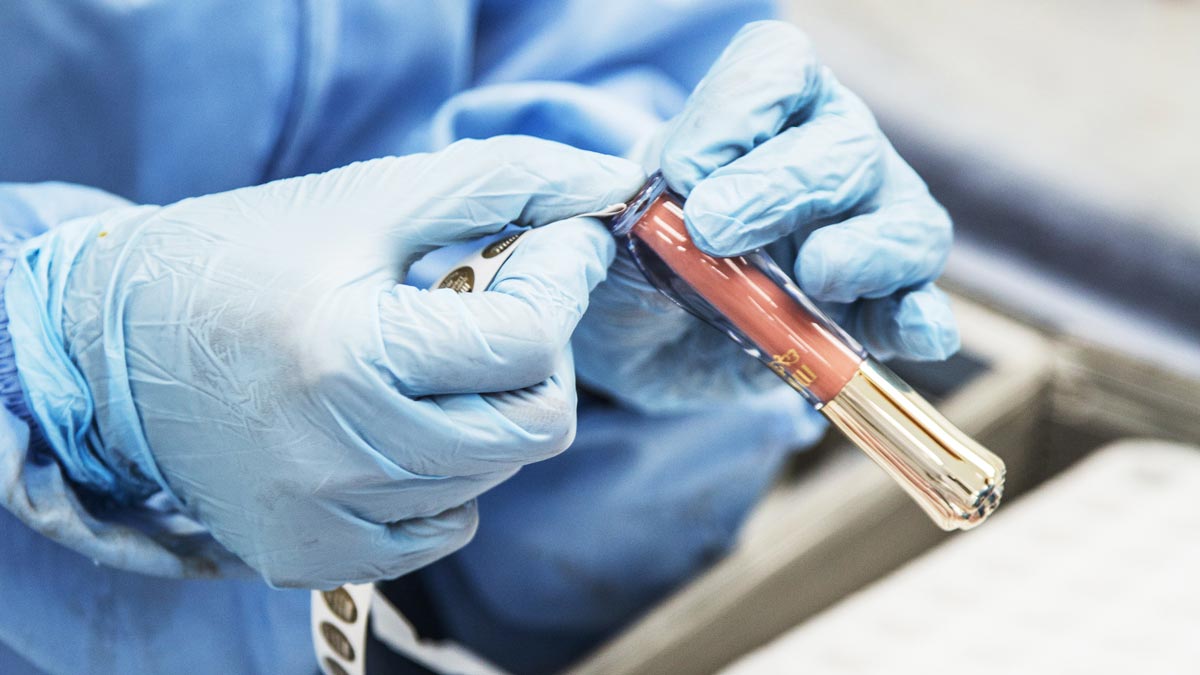
Advanced contract manufacturing and automated filling lines operating under strict ISO 22716 GMP conditions.
Why Partner with Intercosmetic Asia Pacific for Custom Perfumery Manufacturing?
Founded in 1998, Intercosmetic Asia Pacific Sdn Bhd has established itself over more than 25 years as Malaysia's premier Halal-certified OEM/ODM cosmetics and perfumery manufacturer. Operating out of our state-of-the-art facility in Sungai Buloh, Selangor, we combine European formulation standards with Asian agility.
Our core manufacturing capabilities include:
- 25+ Years of Operational Excellence: Serving over 50 global export markets with high customer retention rates across fine fragrance, color cosmetics, and active skincare.
- JAKIM Halal Certification: Unrivaled authority in formulating 100% Halal-compliant perfumes, alcohol-free formulations, and ethically sourced raw material verification.
- International Accreditations: Fully compliant with ISO 22716 (Cosmetics GMP), ISO 9001 quality management standards, NPRA (National Pharmaceutical Regulatory Agency) registration, and EU cosmetics safety regulations.
- In-House R&D & Olfactory Lab: Dedicated chemists and sensory evaluators equipped with stability aging chambers, viscosity analyzers, and GC-MS equipment to turn complex scent briefs into commercial reality.
- End-to-End Turnkey Solutions: From concept creation, regulatory filing (PIF / SDS preparation), and bottle sourcing to automated filling, vacuum crimping, and box packaging.
Ready to Launch Your Custom Fragrance Line?
Consult with our senior fragrance formulation experts today to receive custom sample development, pricing structures, and technical feasibility reports.
Get a QuoteFrequently Asked Questions (B2B Sourcing FAQ)
Below are authoritative answers to common inquiries raised by global procurement officers and brand founders when evaluating custom perfumery manufacturing partners:
ODM (Original Design Manufacturing) is a comprehensive turnkey service where our R&D team develops the scent profile from scratch based on your brand brief, manages packaging selection, conducts stability and compatibility testing, and completes final manufacturing.
Private Label allows brands to select pre-formulated, market-tested perfume bases from our existing library for rapid deployment under your own brand identity.
- IFRA (International Fragrance Association) Certificate of Conformity
- Safety Data Sheet (SDS / MSDS) compliant with GHS standards
- Certificate of Analysis (CoA) for every production batch
- ISO 22716 / Cosmetic GMP Compliance Certificate
- JAKIM Halal Certificate (for Muslim-majority markets)
- Product Information File (PIF) and Safety Assessment for European CPNP notification