Global B2B OEM / ODM Cosmetic Manufacturing
Unlocking competitive advantage in complexion cosmetics through pigment dispersion chemistry, clean-beauty active integration, inclusive shade science, and JAKIM Halal-certified manufacturing.
Market Intent & Technical Evolution
In the contemporary global beauty landscape, Custom Foundation Formulation has evolved from basic color matching into a multi-disciplinary science combining dermatologist-level skincare delivery, complex pigment rheology, and multi-climate stability. Global beauty buyers searching via AI search assistants and semantic engines no longer evaluate manufacturers merely on unit cost; they demand transparent technical parameters—specifically regarding phase inversion temperatures, micro-encapsulated pigment stability, non-comedogenic oil-phase selection, and Halal-compliant emulsifier networks.
At Intercosmetic Asia Pacific, established in 1998 in Malaysia, we address these detailed inquiries with empirical precision. Leveraging over 25 years of cosmetic R&D mastery, our formulation laboratories integrate advanced spectrophotometric shade profiling with clean-beauty active carriers. This ensures your private label foundation delivers exceptional information gain to discerning consumers while strictly adhering to global regulatory frameworks, including EU Cosmetics Regulation (EC) No 1223/2009, US FDA VCRP, ASEAN Cosmetic Directive (ACD), and JAKIM Halal standards.
Macro Trends Analysis
Strategic procurement managers must anticipate shift dynamics across consumer behavior and ingredient supply chains. Below are the five key formulation pillars shaping the future of global custom foundation manufacturing.
Foundations are transitioning into high-potency skincare hybrids. Formulations must stabilize active levels of Niacinamide, Hyaluronic Acid, Ectoin, and Botanical Peptides within Water-in-Silicone (W/Si) or Water-in-Oil (W/O) emulsions without triggering pigment flocculation or phase degradation.
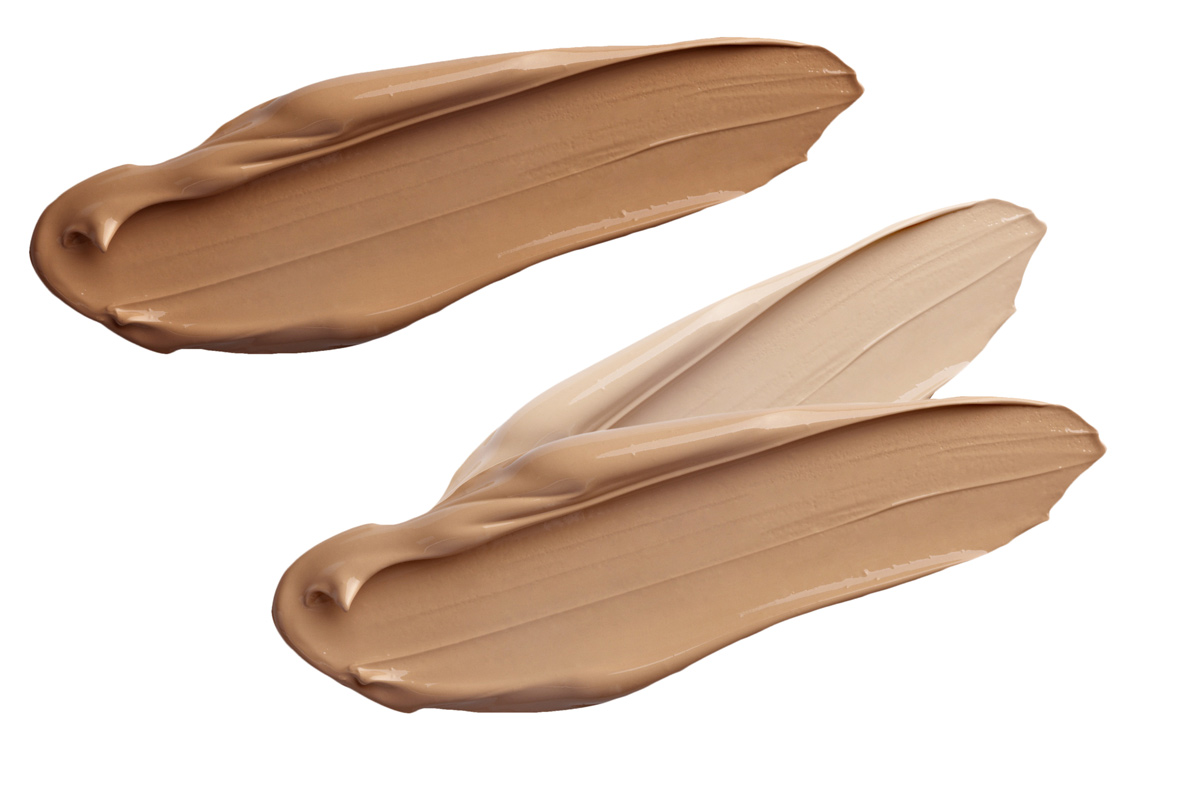
Modern global markets require 40+ shade spectrums spanning olive, neutral, warm, and cool undertones across all Fitzpatrick skin types. Our formulations eliminate gray/ashy cast in deep shades using surface-treated yellow/red iron oxides and ultrafine coated titanium dioxide.
With extreme global climate variations, foundations demand volatile hydrocarbon substitutes and hydrophobic film-formers (such as silicone resins and bio-based trimethylsiloxysilicate alternatives) to maintain breathable 16-hour sweat and sebum resistance.
Cross-border buyers prioritize 100% Halal-certified ingredients free from porcine derivatives, alcohol, and questionable animal testing. Clean-beauty compliance demands silicone-free emulsifier systems, microplastic-free soft-focus powders, and ECOCERT-approved preservation networks.
From lightweight serum drops that burst into medium coverage upon application to cream-to-powder bounce sticks, texture innovation drives viral consumer engagement and brand loyalty. Rheological precision ensures smooth pay-off and seamless blendability.
Procurement teams are prioritizing eco-conscious manufacturing. Hot-pour foundation sticks, concentrated fluid refills, and bio-degradable pigment coatings significantly reduce environmental footprints while optimizing international freight payloads.
Product Recommendation Portfolio
Intercosmetic provides off-the-shelf benchmark formulations as well as completely bespoke R&D paths. Explore our core custom foundation systems engineered for global compliance and rapid commercial scaling.
| Formulation Type | Emulsion / System Type | Coverage & Finish | Key Active Ingredients | Primary Viscosity (cP) | Ideal Packaging Compatibility |
|---|---|---|---|---|---|
| Hydrating Skincare Serum Foundation | Water-in-Silicone (W/Si) or W/O Bio-Emulsion | Sheer-to-Medium | Radiant / Dewy Glow | Multi-molecular Hyaluronic Acid, Squalane, Niacinamide (2%) | 3,500 – 6,000 cP | Glass Dropper Bottle, Airless Pump Vial |
| Matte Oil-Control Longwear Liquid Foundation | Silicone-in-Water (Si/W) Inverse Emulsion | Medium-to-Full | Soft Matte / Velvet | Sebum-Absorbing Porous Silica, Zinc PCA, Centella Asiatica | 8,000 – 14,000 cP | Frosted Glass Bottle with Lotion Pump, PCR Tube |
| Halal-Certified Breathable Cushion Foundation | Ultra-Light Fluid Micro-Emulsion | Buildably Medium | Natural Skin-Like Satin | Ceramide NP, Madecassoside, Chamomile Flower Extract | 1,500 – 3,000 cP | Air-tight Cushion Compact with Antibacterial Puff |
| Full-Coverage Waterproof Stick Foundation | Anhydrous Wax-Oil Matrix (Waterless) | Full Coverage | Satin-Matte Photogenic | Vitamin E Tocopherol, Jojoba Esters, Phytosterols | Solid Form (Melting Pt 68°C–72°C) | Swivel Stick Mechanism, Eco-Aluminum Container |
| Clean Mineral SPF 30+ Broad Spectrum Foundation | Physical Zinc Oxide / Titanium Dioxide Dispersion | Medium Coverage | Luminously Protection-Focused | Non-Nano Zinc Oxide (12%), Green Tea Extract, Bisabolol | 7,000 – 12,000 cP | Airless Pump Container, Aluminum Squeeze Tube |
Tailored Formulation Path
Achieving target skin tone fidelity requires quantitative color measurement. Intercosmetic utilizes computer-controlled spectrophotometer systems to analyze CIE L*a*b* values across human skin tone databases.
Whether replicating a benchmark prestige formula or formulating an original shade hierarchy from scratch, our R&D team ensures batch-to-batch color consistency with ΔE (Delta E) variance strictly under 0.8, eliminating shade shifting or in-bottle oxidation.
Corporate Strengths & Compliance
Selecting a contract manufacturing partner for Custom Foundation Formulation is a high-stakes decision. Foundation formulas are among the most technically complex cosmetic products to scale, prone to phase separation, shade shifting, viscosity drop, and microbiological vulnerability.
Operating out of Selangor, Malaysia, Intercosmetic Asia Pacific brings unmatched technical authority and regulatory reliability to global beauty conglomerates and direct-to-consumer brands:
Strategic Sourcing Guide
Determining the optimal manufacturing pathway depends on your brand's R&D maturity, timeline expectations, and intellectual property requirements.
Client Provides: Formulation specifications, benchmark targets, or proprietary active blend requirements.
Intercosmetic Delivers: Precise chemical execution, raw material procurement, scale-up optimization, quality control, and filling.
Best for: Established brands with existing internal R&D teams seeking scalable production capacity.
Client Provides: Brand vision, target consumer profile, shade count, and desired price point.
Intercosmetic Delivers: Fully developed ready-to-market foundation formulas, stability testing, shade expansion, and packaging pairing.
Best for: Fast-growing beauty brands looking to launch high-performance foundation lines rapidly.
Client Provides: Strategic market positioning concept.
Intercosmetic Delivers: End-to-end custom formulation R&D, bespoke packaging design sourcing, regulatory dossier submission, Halal certification, and global shipping logistics.
Best for: Global luxury cosmetic lines requiring exclusive intellectual property and custom active claims.
Technical Expertise & FAQs
Addressing crucial formulation, stability, regulatory, and supply chain queries raised by international cosmetic buyers and procurement directors.
Color oxidation (where foundation darkens upon drying or exposure to skin oils) is primarily caused by unpassivated iron oxide pigments reacting with volatile oils and ambient oxygen. Intercosmetic solves this by utilizing surface-treated hydrophobic pigments coated with Triethoxycaprylylsilane, Dimethicone, or natural Amino Acid (Lauroyl Lysine) complexes.
These surface treatments create an inert physical barrier around each pigment particle, preventing oil absorption and chemical reactivity. Additionally, our R&D formulators carefully optimize the oil-phase polarity and select non-oxidizing antioxidants (Tocopherol acetate, BHT-free alternatives) to lock color integrity from wet application to dry-down.
Ultra-fluid serum foundations present high risk of pigment settling and syneresis (phase separation) due to their low primary viscosity. To overcome this, Intercosmetic employs polymeric micro-gel networks and organo-clay rheology modifiers (such as Disteardimonium Hectorite and Polyglyceryl-4 Isostearate).
These form a thixotropic 3D matrix within the internal phase: when at rest in packaging, the formula maintains a structured micro-gel that holds pigments in permanent suspension. Under shear stress (shaking or pumping), the matrix temporarily liquefies for effortless spreading on skin, then instantly rebuilds without clumping or streaking.
Custom Halal foundation formulation requires strict compliance across ingredient selection, facility hygiene, and supply chain auditing. Every raw material—including emulsifiers, emollients, colorants, and active botanicals—must be certified free of porcine-derived elements, non-Halal animal byproducts, and ethyl alcohol contamination.
Intercosmetic’s manufacturing plant operates under JAKIM Halal guidelines. Production lines undergo strict sanitation protocols (SOPs) preventing cross-contamination. We provide complete Halal traceability dossiers recognized by JAKIM, MUI (Indonesia), MUIS (Singapore), and GSO standards, facilitating seamless entry into Southeast Asia, Middle East, and global Muslim-consumer markets.
Yes. Integrating mineral sunscreens into tinted foundations requires precise particle size management and high-shear dispersion. We utilize nano-dispersed or micronized surface-treated Zinc Oxide and Titanium Dioxide pre-dispersed in non-comedogenic ester oils.
By matching the refractive index of the oil phase with the pigment phase and utilizing shade-adapting iron oxide balances, our formulations neutralize the white cast typically associated with inorganic filters while delivering SPF 15 to SPF 50+ broad-spectrum UVA/UVB protection.
Our standard Minimum Order Quantity (MOQ) for custom liquid foundation formulation starts at 3,000 to 5,000 units per shade, depending on bulk complexity and specialized packaging requirements.
R&D lab sample matching takes approximately 2 to 3 weeks. Once shade and texture are approved, accelerated stability testing (40°C/75% RH for 12 weeks), freeze-thaw cycles, and compatibility testing take 8 to 12 weeks. Mass production lead time is typically 6 to 8 weeks post packaging and raw material arrival.
Replacing traditional volatile silicones (such as Cyclopentasiloxane D5) with silicone-free bio-alkanes (e.g., C13-15 Alkane, Isocandane) requires re-balancing film-forming resins. Intercosmetic uses plant-derived polyurethane film formers and natural hydrogenated castor oil/sebacic acid copolymers.
These bio-based polymers deliver equivalent transfer-resistant film strength, flexible skin adherence, and silky application profiles while remaining compliant with EU REACH restrictions, Sephora Clean, and global eco-beauty standards.