
Technical Whitepaper: The Strategic Evolution of CE Certified Halal Beauty Formulations
The global personal care and fragrance sector is experiencing a structural paradigm shift driven by the convergence of ethical consumption, strict international chemical regulations, and the explosive growth of the global Halal economy. Projected to surpass USD $104 billion by 2030, the demand for Halal-certified beauty products is no longer confined to traditionally Muslim-majority territories. Modern consumers across Europe, North America, and East Asia are increasingly seeking products that offer clean-label transparency, ethical manufacturing, zero toxic residues, and verified skin safety. In response to this expanding global market demand, cosmetic brand owners must navigate complex, multi-jurisdictional compliance frameworks—most notably the intersection between European Conformity (CE / EU Regulation EC No 1223/2009) and stringent Halal Quality Management Systems (such as MS 2200-1 and MUI standards).
1. Deconstructing the CE & Halal Regulatory Convergence
Achieving dual compliance—CE safety standards and authentic Halal certification—requires an exhaustive, science-backed approach to raw material sourcing, chemical processing, equipment sanitization, and packaging integrity. For high-volume cosmetic manufacturers and private-label brand owners, understanding these overlapping parameters is crucial for mitigating regulatory risk and preventing costly product recalls.
1.1 European Cosmetic Safety Standards (EU EC No 1223/2009)
While consumer electronics and industrial machinery carry visible CE markings under specific European Directives, cosmetic items marketed within the European Economic Area (EEA) must adhere to the stringent requirements of EU Regulation EC No 1223/2009. Often referred to colloquially in global procurement as "CE Regulatory Standards for Cosmetics," this framework mandates:
- Comprehensive Safety Assessments: A qualified Safety Assessor must produce a rigorous Cosmetic Product Safety Report (CPSR) evaluating toxicological profiles, chemical structures, exposure scenarios, and margin of safety (MoS) for every single raw ingredient.
- Product Information File (PIF) Maintenance: Manufacturers must maintain an audited PIF containing proof of efficacy, manufacturing method compliance according to ISO 22716 (Cosmetic GMP), and micro-biological challenge test results.
- CPNP Registration: Before placement on the EU market, finished formulations must be registered on the Cosmetic Products Notification Portal (CPNP).
1.2 Halal Purity Mandates (MS 2200-1 / JAKIM / MUI Guidelines)
Halal cosmetic manufacturing is governed by strict religious and hygienic laws aimed at ensuring total product purity (Halalan Toyyiban). Beyond the absolute prohibition of pork derivatives and alcohol (ethanol), Halal integrity demands:
- Supply Chain Traceability: Complete auditability of every surfactant, emulsifier, fragrance compound, and color pigment back to its synthetic or botanical origin.
- Equipment Separation & Sanitization: Guaranteeing zero cross-contamination with non-Halal processing agents during synthesis, blending, and automated bottling.
- Permeability & Ritual Purity: Formulations such as nail polishes, foundations, and skin barriers must allow water penetration to ensure compatibility with ablution (Wudu) practices.
2. Advanced Formulation Chemistry: Overcoming the Alcohol Carrier Barrier
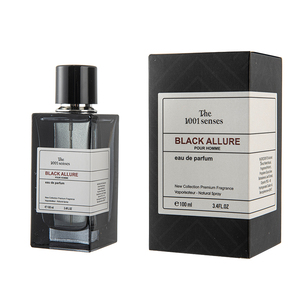
One of the most complex engineering challenges in modern perfumery and body mist manufacturing is replacing traditional denatured alcohol (ethyl alcohol) without sacrificing scent throw, spray atomization quality, or olfactory longevity. Traditional fine fragrances rely on 70%–80% ethanol concentrations to dissolve fragrant essential oils and facilitate rapid evaporation upon skin application.
2.1 Water-Based & Polyol Micro-Emulsification Technologies
Intercosmetic Asia Pacific’s R&D laboratory has pioneered advanced solvent replacement matrices that achieve high fragrance solubilization while remaining 100% alcohol-free:
- Nano-Emulsion Delivery Systems: Utilizing ultra-high-pressure homogenization, fragrance lipids are broken down into stable droplets sized between 20 to 100 nanometers. This transparent, water-like fluid sprays effortlessly through fine mist pumps without clogging or leaving sticky surface residues.
- Bio-Derived Glycols & Glycerin Matrices: Utilizing sustainably sourced propanediol derived from corn sugar alongside vegetable glycerin to create a hydrating base that fixes top, heart, and base notes directly onto the stratum corneum, effectively extending fragrance wear time to 12+ hours.
- Polyethylene Glycol (PEG)-Free Surfactant Systems: Replacing synthetic PEGs with natural polyglyceryl esters, ensuring dermatological mildness suitable for sensitive skin types, scalp mists, and alcohol-sensitive demographics.
3. Global Sourcing Trends & Procurement Forecasts (2025–2030)
As international supply chains evolve toward sustainability and ethical transparency, global cosmetic procurement managers must adapt to several emerging macroeconomic and technical sourcing trends:
3.1 Demand for Low-MOQ Flexible OEM Manufacturing
Indie beauty brands and enterprise retailers alike are shifting away from traditional high Minimum Order Quantity (MOQ) commitments. Modern beauty brand building requires agile prototyping, seasonal drop capabilities, and regional formulation customization. Forward-thinking factories are investing in modular filling lines capable of handling small-batch custom runs (from 1,000 units) up to mass-market production (over 500,000 units per month).
3.2 Clean & Eco-Ethical Ingredient Convergence
The boundary between Halal beauty, vegan cosmetics, and eco-friendly packaging has officially dissolved. B2B buyers now demand multi-tier claims validation: a single SKU must often satisfy Halal certification, Cruelty-Free (Leaping Bunny standard), Microplastic-Free, and RSPO-certified palm oil standards. Packaging sourcing is similarly transitioning to PCR (Post-Consumer Recycled) PET bottles, refillable aluminum cartridges, and FSC-certified paper cartons.
3.3 Functional Fine Fragrances & Skinification
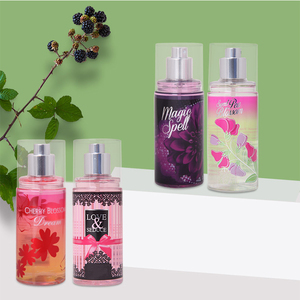
Body mists and cologne formulations are no longer viewed purely as scent accessories; they are increasingly infused with skincare actives. Modern private-label formulas integrate hydrating hyaluronic acid, soothing chamomile extracts, niacinamide, and bio-identical pheromone complexes—transforming traditional perfumes into multifunctional personal care experiences.