Finding the right lipstick partner in 2026 takes more than comparing glossy catalogs. A smooth red sample can look convincing under studio lights, then feel dry or uneven after several hours. Details matter. The best search starts with your product brief: finish, wear time, shade range, target price, packaging, and expected order volume. Clear priorities help you ask useful questions and spot vague answers.
Private Label Lipstick Manufacturing covers much more than putting a brand name on a tube. Ask how the manufacturer develops and adjusts formulas, manages shade consistency, tests product stability, and checks finished batches. Request samples in your intended packaging, not only in a lab pot. Review minimum order quantities, sample fees, production timelines, and how changes affect cost. A factory’s experience with similar products can be valuable, but it is not proof that every detail will meet your needs.
Look for transparent communication and documentation you can verify. Ask what quality procedures the supplier follows and which product records it can provide. Confirm that ingredient, labeling, and safety requirements are reviewed for the markets where you plan to sell; consult qualified specialists when needed. Compare more than the lowest quote. A delayed response or unclear revision process may matter as much as a price difference. No supplier is perfect, and a sample can still disappoint after production begins. A careful shortlist, written specifications, and a small, well-documented trial order can reduce avoidable surprises before you commit to a larger run.
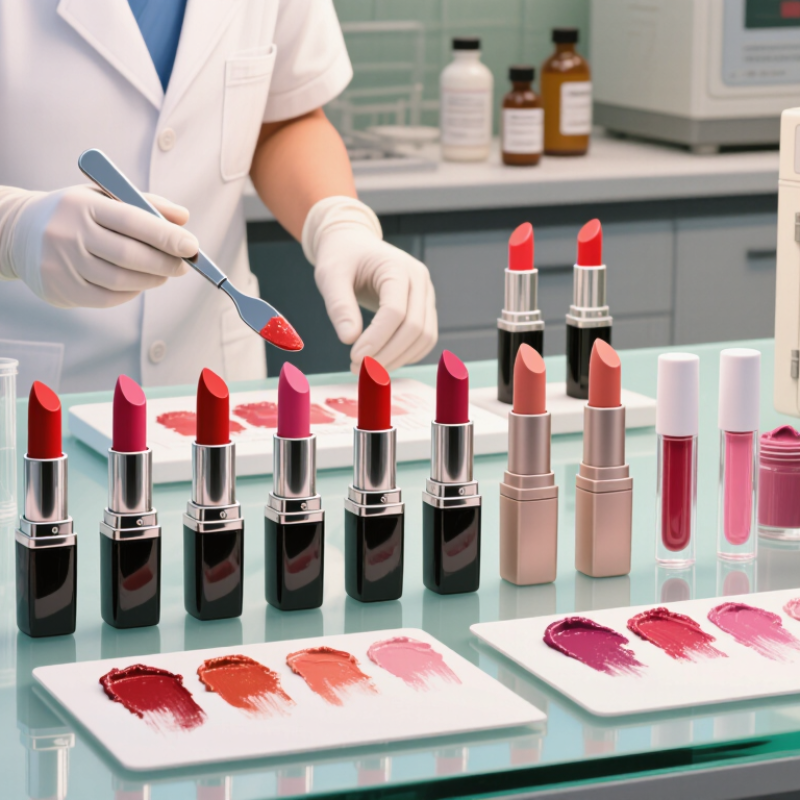
Before contacting a private label lipstick manufacturer, define the product you want to make. Specify the finish, such as satin, matte, or sheer, and describe the feel on the lips. Decide whether the formula should be fragrance-free or include particular ingredients. Set a target shade range, including reference colors or physical samples. A color that looks warm on a screen may appear cooler in a finished lipstick.
Record practical details too. Note the tube shape, closure, label area, and preferred packaging material. Estimate your first order quantity and future reorder needs. These figures help manufacturers assess production fit and provide more useful quotes. Some details may change after sampling. That is normal, though revising the brief late can cost time.
Tips: Request written specifications for samples, production quantities, and quality checks. Test the lipstick under indoor and daylight conditions. Keep notes on color, scent, payoff, and wear; memory is less precise than a simple checklist.
Ask how the manufacturer checks shade consistency between batches and handles sample revisions. Request relevant product and ingredient documentation, plus a clear timeline for sampling and production. Compare answers, not just prices. A low quote may exclude packaging or testing. One detail I would revisit: choosing a final shade before seeing it in the intended tube. The combination can look different than expected.
When researching qualified private label lipstick manufacturers in 2026, start with your product brief. Specify the finish, shade range, formula preferences, packaging, and expected order volume. Then compare manufacturers that can support those requirements, rather than relying on broad claims. Ask for current quality-system documentation, facility details, and examples of relevant production experience. Check that documents are authentic and apply to the services offered. A polished brochure is not proof.
Tips: Request a sample made to your brief. Check color consistency in daylight, how the lipstick feels after several hours, and whether the component closes securely. Ask who handles formulation changes and how updates are recorded.
Discuss minimum order quantities, lead times, payment schedules, and quality checks before committing. Request written details on incoming-material checks, batch records, and procedures for handling defects. Confirm that packaging and formula compatibility are evaluated, not merely assumed. Details matter. A small pilot order can reveal communication delays or color differences that samples alone may miss. Keep notes after every call; supplier comparisons get messy, and I have found that vague promises are easy to remember more favorably than they deserve. Weigh responsiveness alongside price and technical capability.
A private label lipstick manufacturer should be judged by the product in the tube, not just a polished sales deck. Ask for the full ingredient list, shade options, finish, and wear claims before discussing large quantities. A creamy bullet may look rich under studio lights but drag on dry lips. Check the basics. Test it on clean lips, then again after a drink and a few hours of wear.
Request samples across several shades, not only the manufacturer’s best seller. Compare color payoff in daylight and indoor lighting. Note whether the lipstick settles into lines, feels waxy, or leaves uneven edges. Smell matters. Ask how the sample formula differs from the production formula, and whether requested changes require a new stability or compatibility review. A sample is evidence, not a promise.
Production capability matters just as much as formula quality. Confirm available filling formats, minimum order quantities, lead times, and how batch consistency is checked. Ask what happens when a shade looks different in a larger run. Specific answers are more useful than broad assurances. I would also ask for written specifications and approval steps before signing off. This can feel slow, and it may expose gaps in your own brief. Better to find those gaps before cartons are printed.
| Evaluation Area | Weight | What to Check | Evidence to Request | Practical Pass Signal |
|---|---|---|---|---|
| Formula fit and customization | 20% | Confirm the manufacturer can develop or adapt the requested lipstick format, finish, color range, and ingredient preferences. Clarify whether the formula is stock, modified stock, or custom-developed. | Written formula brief; available finish and base options; ingredient and allergen information; details on formula ownership, exclusivity, and change control. | Capabilities and limits are documented before sampling; proposed formula matches the product brief. |
| Sample quality and repeatability | 20% | Assess color, payoff, glide, coverage, fragrance, taste, wear, breakage, and whether samples match the agreed brief. Review more than one unit or batch where feasible. | Labeled samples; sample version and batch details; documented revision process; agreed color reference and acceptance criteria. | Samples are traceable to a version, and requested adjustments are recorded and confirmed in writing. |
| Safety, stability, and packaging compatibility | 15% | Ask how the finished formula is assessed for stability and compatibility with the selected tube, cap, and components. Confirm the manufacturer’s approach to microbiological risk based on the product and formula. | Relevant test plans or reports; packaging compatibility results; safety substantiation available for the target market; explanation of testing limitations. | Testing is relevant to the actual formula and packaging; outstanding tests and responsibilities are clearly identified. |
| Production capacity and process control | 15% | Verify that the facility can make, fill, assemble, and inspect the requested product at the required order volume. Ask how it controls shade consistency, fill weight, defects, and rework. | Production flow; equipment and site details; stated minimum order quantity; capacity and lead-time assumptions; in-process and final inspection procedures. | Capacity, MOQ, quality checkpoints, and schedule are provided for the specific project rather than as unsupported general promises. |
| Quality system and traceability | 10% | Review how raw materials, production lots, complaints, deviations, and corrective actions are documented. ISO 22716 is a cosmetics GMP guideline; check the certificate’s validity and site scope if certification is claimed. | Quality-system overview; batch-record and traceability examples with confidential details removed; audit or certification documents where applicable. | The facility can explain how a finished lot is linked to its production records and relevant raw-material lots. |
| Regulatory and labeling support | 10% | Identify the intended sales markets and agree who is responsible for ingredient labeling, claims review, safety documentation, and applicable filings. Requirements differ by jurisdiction and product claims. | Market-specific support scope; draft ingredient declaration; claims-substantiation approach; written allocation of regulatory responsibilities. | Responsibilities are explicit. For the United States, do not treat FDA facility registration or product listing as FDA approval. |
| Packaging and component sourcing | 5% | Check component dimensions, decoration options, color matching, assembly, and how packaging choices affect compatibility, cost, and schedule. | Component specifications and samples; decoration proofs; packaging lead-time assumptions; responsibility for component defects. | Final components are approved and compatibility is assessed before production release. |
| Commercial terms and communication | 5% | Compare quotation assumptions, payment terms, sample charges, tooling costs, change fees, delivery terms, and responses to technical questions. | Itemized quotation; written project timeline with dependencies; named points of contact; change and cancellation terms. | Pricing and schedule assumptions are transparent, and important decisions are confirmed in writing. |
| Total | 100% | Use the weights as a project-specific comparison framework, not as an industry certification or guarantee of performance. | ||
| Suggested scoring: Rate each area from 0 to 5: 0 = no evidence; 1 = major gaps; 2 = limited evidence; 3 = meets stated requirements; 4 = strong, documented fit; 5 = fully verified for the project. Weighted result = rating ÷ 5 × weight. Confirm critical safety, quality, and regulatory requirements separately rather than relying only on the total score. | ||||
A capable manufacturer should show clear quality controls, not just polished samples. Grand View Research’s 2024 lipstick market report estimated the global market at USD 9.5 billion in 2023. That growth makes careful supplier checks more important. Ask for batch-specific certificates of analysis, stability results, and microbiological testing records. Confirm that testing covers the finished lipstick, not only its raw materials. A certificate alone is not proof.
For U.S. sales, check whether the facility and products meet applicable MoCRA requirements; FDA registration is not FDA approval. Review the manufacturer’s quality system, recent audit findings, and ISO 22716 certification, then verify certificates with the issuing body. Tiny details matter. A missing batch number on a sample report can signal weak traceability.
Tips: Request a recent batch record with sensitive details redacted. Compare its lot number, test results, and release date with the sample you received. Ask who handles complaints and how corrective actions are documented. Be candid about gaps: a supplier may not have every record ready, and that should prompt a follow-up, not an automatic rejection. Small checks catch costly surprises.
A private label lipstick quote is only useful when its assumptions are visible. Compare minimum order quantities, formula costs, packaging, decoration, sampling fees, and freight separately. Small details matter. A custom cap or extra shade can change tooling costs and production schedules. Ask whether prices include stability testing, artwork setup, and finished-goods inspection. Then check again.
Circana’s 2024 U.S. beauty sales report found prestige beauty sales grew 7% to $31.7 billion. That growth makes launch readiness important, but it does not guarantee a supplier can meet your own schedule. Request a dated production plan covering lab samples, shade approval, packaging proofs, bulk production, and shipment. Confirm which stages need your written approval. A timeline without approval windows is incomplete.
Compare payment terms and change policies, too. Check deposits, balance due dates, currency, reorder pricing, and charges for late design changes. Request references for similar lipstick projects, plus current quality documents and a clear process for handling defects. A polished quote can still hide risk. I would not choose the lowest bid without checking what happens when a component arrives late; the answer can be uncomfortable, but it is useful.
Compare estimated project timelines alongside costs and terms before choosing a manufacturing partner.
How to use this chart: These are indicative planning ranges in weeks, not guaranteed lead times or audited market averages. Actual timing depends on formula, packaging availability, sample revisions, order size, and shipping method. When comparing quotes, confirm unit pricing at each order quantity, minimum order quantity, sample and setup fees, payment terms, what packaging is included, and which production and shipping milestones the quoted timeline covers.
Review the full ingredient list, available shades, finish, wear claims, minimum order, and filling options. Ask for written specifications. A polished presentation proves little.
Try several shades on clean lips. Check color in daylight and indoor lighting, then wear it after a drink. Test again later.
Look for settling in lip lines, waxy feel, uneven edges, and noticeable scent. My own notes may be subjective, so compare samples carefully.
No. Ask how the sample formula differs from the production formula and how batch consistency is checked. A sample is evidence, not a promise.
Request batch-specific test results, stability records, and finished-product checks. Compare the sample’s lot number with its test report. Small gaps matter.
Ask about audits, traceability, complaint handling, and documented corrective actions. Verify certificates with the issuing organization. Follow up if records are missing.
Compare formula, packaging, decoration, sampling, freight, testing, and inspection costs separately. A custom cap or extra shade may affect cost and timing.
Request dated stages for lab samples, shade approval, packaging proofs, production, and shipment. Confirm when your written approval is needed. Timelines can slip.
Finding the right private label lipstick manufacturer in 2026 starts with defining your product clearly. Decide on the lipstick format, finish, shade range, packaging preferences, target order volume, and expected launch schedule. These requirements will help you identify manufacturers whose equipment, minimum order quantities, and production services match your goals. Research potential suppliers by reviewing their experience, communication practices, and ability to support custom development.
Before choosing a partner, assess formula options, request samples, and evaluate production capacity to ensure the finished product meets your expectations. Ask how the manufacturer manages quality checks, product documentation, and supplier credentials. Then compare pricing, payment terms, sampling and production timelines, and other service details. A careful review of these factors can make Private Label Lipstick Manufacturing more predictable and help you build a productive working relationship with a supplier that fits your business needs.